Banana Republic GPT
The Problem: How Might We Improve Customer Loyalty by Keeping Purchase Sessions under 3 Minutes for Online Shoppers?
Shoppers want to find and purchase products on their favorite
e-commerce platforms without sifting through 100+ inventory items each time they return. With the goal of spending the expected 2-3 minutes (peasy.nu) or shorter during a new session, their priority is on meeting with the people with whom and the events where they use their bought items.
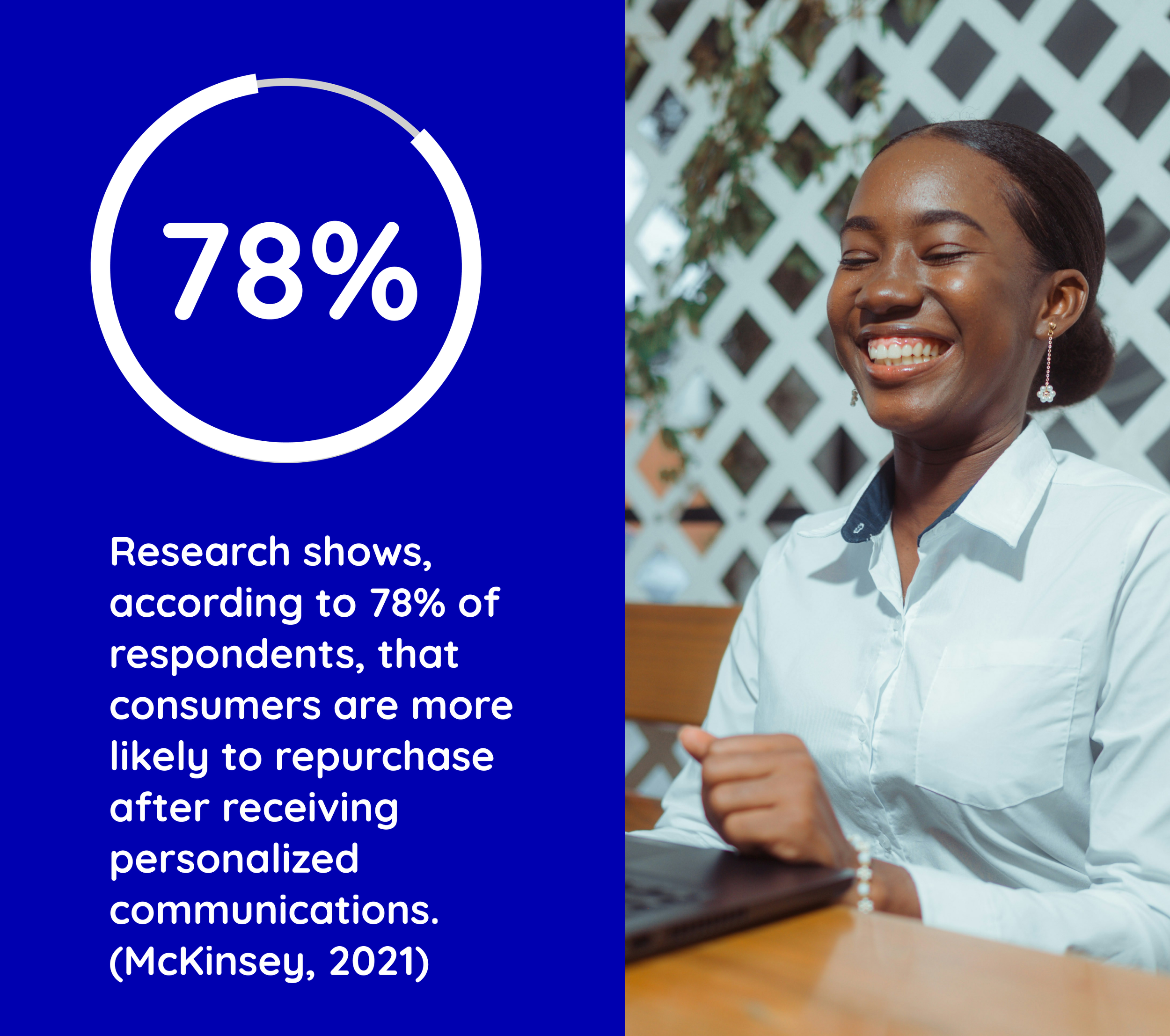
78% of Consumers demand Personalization
According to McKinsey, consumers are more likely to repurchase after receiving personalized communications (2021, link). Precisely, personalization entreats loyalty, as the report says, “recurring interactions create more data from which brands can design ever-more relevant experiences—creating a flywheel effect that generates strong, long-term customer lifetime value and loyalty”.
Further on personalization, McKinsey revealed that the #1 shopper expectation is as follows (2023, link):
“Give me relevant recommendations
I wouldn’t have thought of myself”
More Experience Gaps


Icons source, respectively: Illustraly on Flaticon.com, and Ricons on thenounproject.com
81% want a Seamless Human Handoff Process
When escalation happens, agents receive no context. Customers them need to re-explain from scratch. As a result, handle times spike. Zendesk reports that 81% of consumers want customer experience representatives to pick up where they left off in their conversation with AI (2026, link). This research involved 11,000+ people across 22 countries.
"I'm transferring you to an agent. Please hold." — and then silence.”
No Connection to Commerce Systems
Legacy bots sit outside your Shopify, Zendesk, and inventory stack. They can read FAQs but can't track packages, initiate returns, or check real stock. IBM speaks to this need by stating that “Advanced chatbots require integration with product catalogs, CRM tools and other logistics. If done incorrectly, it can lead to broken experiences or inaccurate responses” (2025, link).
“Your package is being processed at a logistics facility…”
The Solution
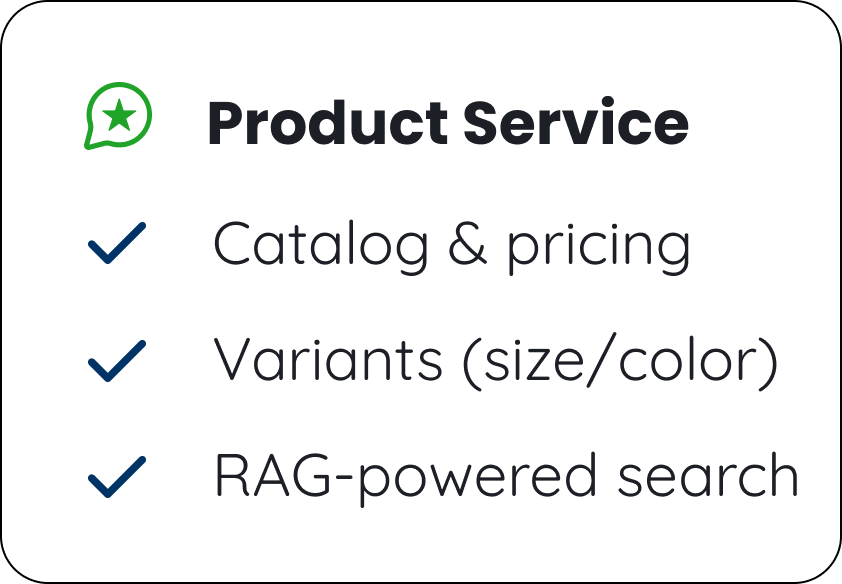
A 4-layer AI stack for e-commerce
Retail GPT connects a chat UI to live commerce systems through GPT function calling - so every response is grounded in real data from the backend.
Chat UI - Web/Mobile
GPT (Open AI) - Reasoning layer
Tool/API Layer - Function calling
Commerce backend - Shopify-like
Why Now

Function-Calling in
GPT 4.1
GPT can reliably decide which backend tool to invoke, pass structured arguments, receive results, and synthesize a grounded response — all within a single sub-4-second round trip. This capability didn't exist at this reliability level late 2024/early.
Icons source, respectively: Oksana, thenounproject.com, Rahul Kaklotar, Flaticon.com, and Alzam, thenounproject.com

Commerce APIs are
real-time
Shopify's 2024 API expansion enables real-time reads of orders, inventory, and customer data at scale. The plumbing now exists to build a single integration layer that connects GPT to the full retail backend stack.

Customer Experience takes first place
Post-pandemic data proved that bad support directly kills Lifetime Value. As Zendesk puts it, “When 85% of CX leaders say one unresolved issue is enough to lose a customer, speed, accuracy, and empathy become non-negotiable (2025, link)”. The same data shares that “86% of consumers say responsiveness and accuracy strongly influence purchasing decisions.”
6 capabilities that define the best retail AI
Using Figma Make and ChatGPT (toolset listed below) primarily, I looked into features of the best conversational AI while comparing UI through live prototyping across Enterprise Support, Knowledge Base AI, E-commerce Support and Proactive Chat interfaces. Claude and Copilot were also employed during my research to source the 6 key qualities listed on the right.
-
Demonstrating great understanding by not asking the customer to repeat themselves. Cultivating fluent conversation. “A great conversational bot doesn't require users to type too much, talk too much, repeat themselves several times, or explain things that the bot should automatically know and remember. ” (Microsoft Learn, 2024, link)
-
Track, cancel, return - not just answer. Salesforce describes today’s AI as capable of understanding context, taking action, making decisions, and adapting in real time (2025, link). Meanwhile, Open AI buttresses that agents are able to access “various tools to interact with external systems—both to gather context and to take actions—and dynamically selects the appropriate tools depending on the workflow’s current state, always operating within clearly defined guardrails.” (accessed in 2026, link)
-
-
Concise and human-centered dialogue is the nature. How Google Assistant describes this trait is that “Your persona should leverage the power of natural language understanding to adapt to the user’s word choices, instead of forcing the user to memorize a set of commands.“ (developers.google.com, 2024)
-
Admits uncertainty and never fabricates data. The precaution OpenAI advocates for in AI agents design is to “Assess the risk of each tool available to your agent and use your assigned ratings to trigger automated actions, such as pausing for guardrail checks before executing high-risk functions or escalating to a human if needed.“ (accessed 2026, link)
-
Hands off with full context to the human-in-the-loop. “A good handoff effectively remembers where the user left off and helps them continue the task they set out to accomplish.” (Microsoft Copilot resource, 2024, link)

Figma Make

ChatGPT

Claude

Copilot
Prototype
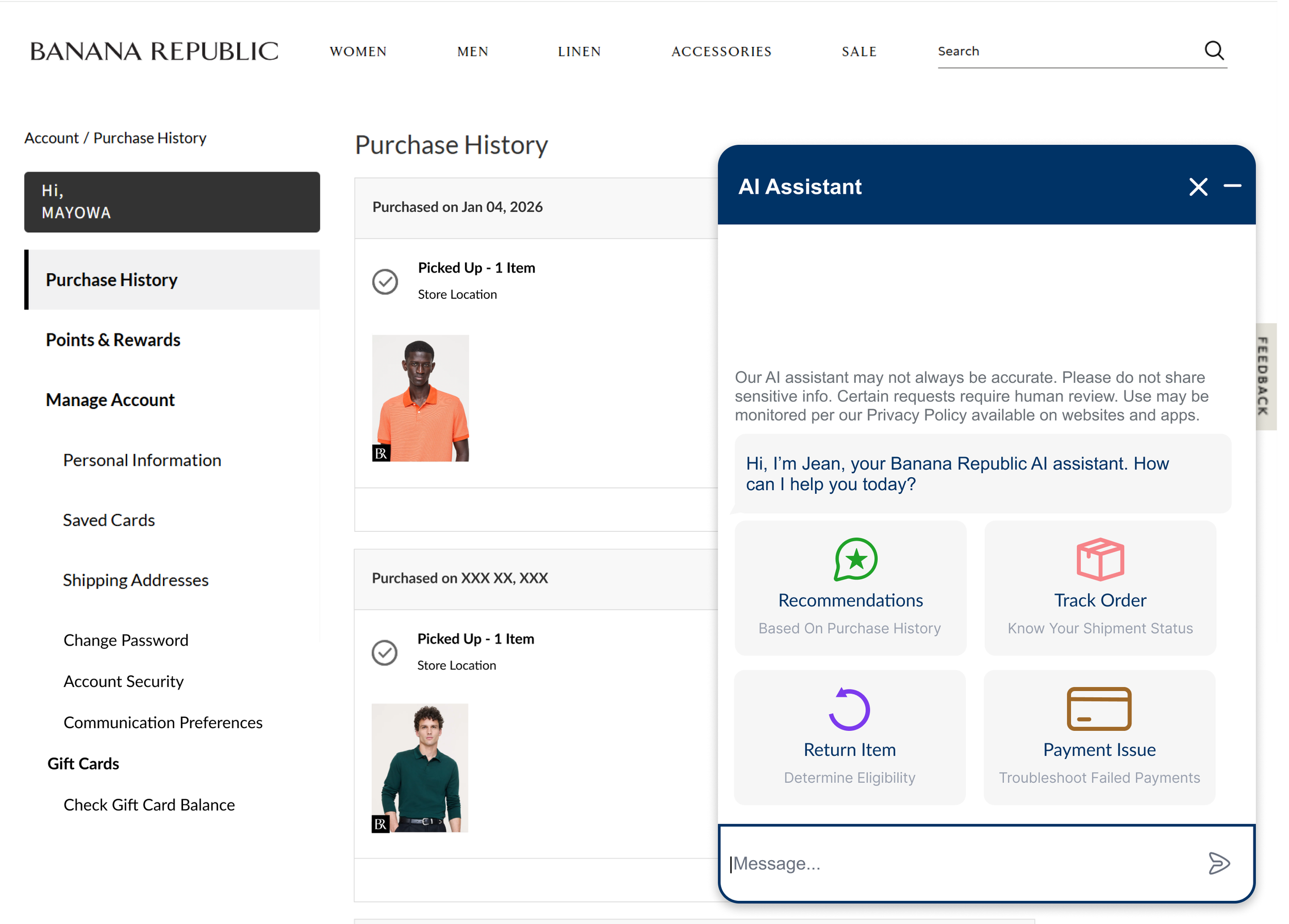
Before Testing
Before testing my prototype, the only way to access the GPT was by visiting the purchase history page where the chat with us button was. However, on testing, the feedback from more than 50% of respondents wanted to discover the feature on landing on the home page of the site sot they could expedite their shopping immediately. This led to a second iteration which applied those changes.
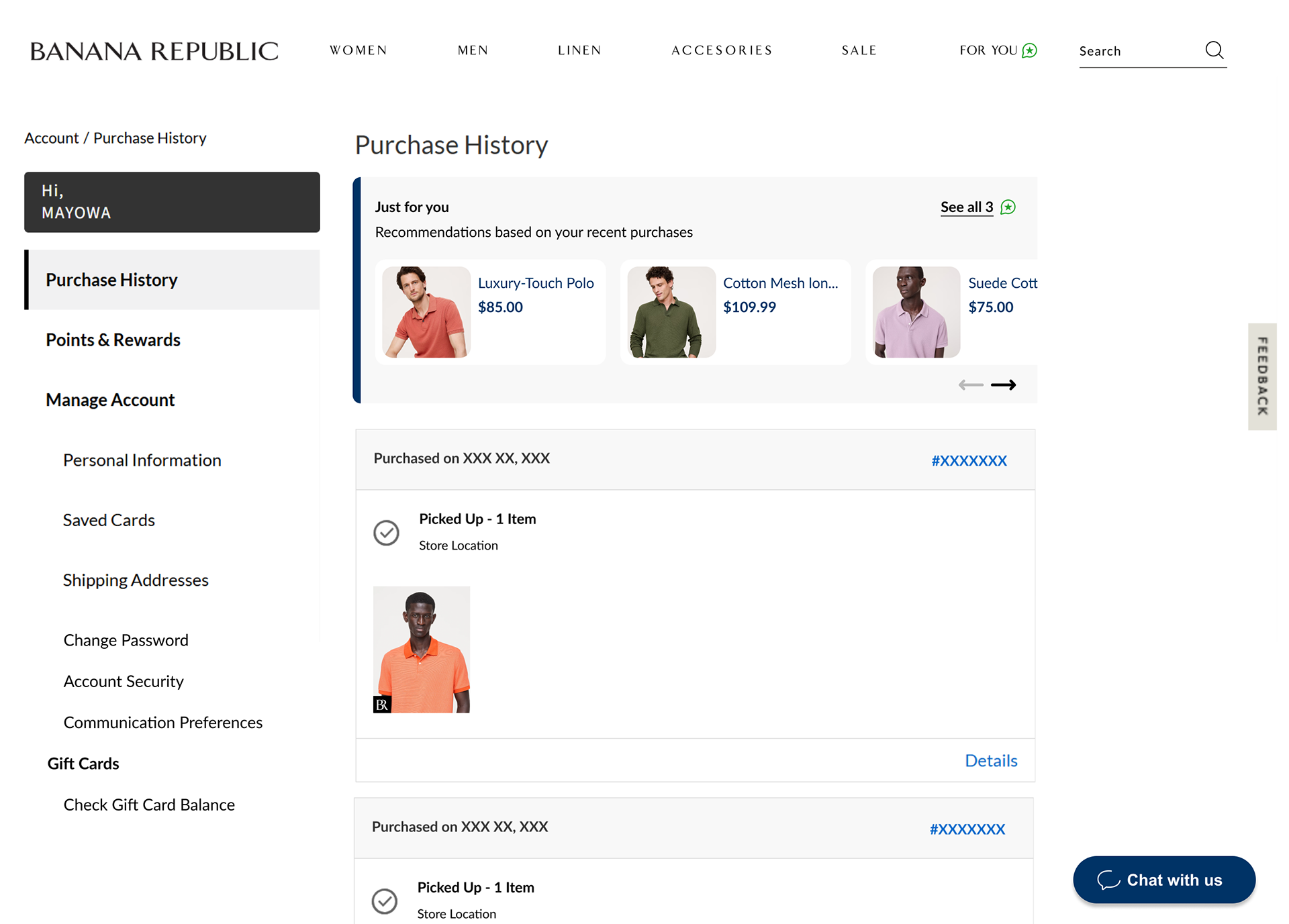
After Testing
Following testing with 4-5 users, a key iteration I made was to improve the discoverability of the GPT functionality. This was done by adding 2 elements: a For You button in the menu navigation which is accessible site-wide, and secondly, an in-line strip of recommendations on the My Account page and Purchase History section as shown below.
Future Plans
An additional piece of feedback from testers was to consider the possibility of applying this concept to multiple retail stores to scale the experience. So, with more time I want to explore this opportunity, where users can source desired styles across retailers through conversational GPT searches.